Moka Pot Troubleshooting: Model and Maintenance Checks
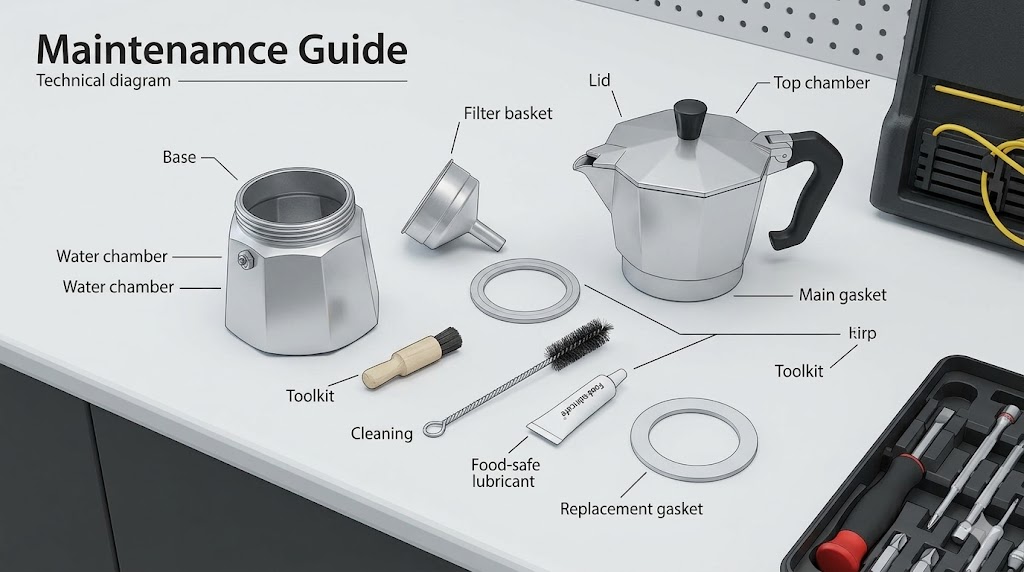
Start with the instructions for your exact moka pot. These ten sections cover taste, leaks, brewing changes, stove fit and maintenance checks. Where the Bialetti Moka Express manual provides guidance, it is identified as model-specific. Persistent malfunction or damage requires manufacturer or dealer assistance.
Quick Diagnosis
Start with your exact model instructions. Stop heating equipment that leaks or behaves abnormally and let it cool completely before checking it. This guide does not establish a 90% success rate, a most-common-cause ranking or a universal parts price.
Problem #1: Weak-Tasting Coffee
Record the beans, brewed coffee amount and any added water or milk before comparing results. Taste alone does not establish which preparation variable caused it.
Follow your exact pot's filling and heat instructions. For Moka Express, use the specified water level, Moka-ground coffee without tamping and the permitted heat; remove it when the upper chamber is full. Do not substitute a universal stove dial setting, fixed brewing time or 80%-full removal rule.
Check equipment for leaks or damage using the manufacturer instructions before changing preparation. Related reading: grind size guide. A general grind guide does not replace exact-model instructions.
Problem #2: Moka Pot Leaking Steam or Water
Stop heating a leaking or abnormally behaving pot and let it cool completely before inspecting it. A leak alone does not identify which part is at fault.
Checks Specified for Moka Express
- Check correct assembly and tightening according to the manual, without forcing the handle.
- Check the gasket for wear and replace it with a compatible original part when required.
- Check for coffee grounds on the water-chamber rim and clean as instructed.
- If the product is damaged, remains faulty or its suitability is uncertain, stop using it and contact the dealer or manufacturer.
The primary manual is linked below. These are Moka Express checks, not a verified cause-frequency ranking or universal repair procedure. Other models may have different parts and instructions.
Problem #3: No Coffee Dispenses
Stop heating a pot that behaves abnormally. Let it cool completely before opening or inspecting it. Do not keep increasing heat to force a blocked or malfunctioning pot to brew.
Use the Exact Model's Checks
- For Moka Express, the manual asks users to check that all parts are present, assembly is correct and there are no leaks.
- Check the specified water quantity and coffee suitable for the model. Moka Express specifies water at the lower edge of its safety valve and Moka-ground coffee without tamping; this does not establish a universal minimum of 60% capacity.
- Inspect and clean cooled parts only as the manual permits. The Moka Express filter-plate cleaning procedure is distinct from valve inspection; do not treat one tool or cleaning mixture as suitable for every component.
- For suspected valve malfunction, follow the valve section below and manufacturer assistance. The valve is not a generic water-flow regulator to adjust.
- Stop using damaged or persistently malfunctioning equipment and contact the dealer or manufacturer.
A no-flow symptom alone does not prove a filter blockage or identify the grind as the cause. This guide does not prescribe a generic toothpick, pipe-cleaner or 1:1 vinegar-soak remedy. See the primary manual linked in the repair section for the exact Moka Express procedures.
Problem #4: Unexpected Sputtering or Noise
Sound and elapsed time alone do not establish whether the equipment is functioning correctly. This guide has no measured sound progression or universal early-sputtering threshold.
If the pot behaves abnormally, stop heating and let it cool completely before inspection. Check preparation, assembly and possible leakage using the exact manufacturer instructions. For Moka Express, remove the pot from heat when the upper chamber is full; persistent valve venting requires the checks and dealer assistance described below.
Do not keep adjusting heat or brewing through a suspected malfunction merely because a generic table labels a sound normal.
Problem #5: Bitter-Tasting Coffee
Compare recorded preparations using the same beans and permitted equipment settings. A bitter taste alone does not establish over-extraction or a component fault.
For Moka Express, follow its specified grind, no-tamping, heating and cleaning guidance. Do not substitute an earlier-removal or cold-water-cooling remedy for the exact model instructions. Related reading: Why Is My Moka Pot Coffee Bitter? (7 Causes + Solutions). Check those suggestions against the manufacturer manual.
Problem #6: Unexpected Metallic Taste
A taste description alone does not establish its cause. Check the exact model's first-use and cleaning instructions, water and coffee preparation, and whether the equipment is intact. Stop using a damaged or malfunctioning pot and contact the manufacturer.
For Moka Express, the manual specifies an initial water-only preparation and at least three coffee preparations to discard. It also specifies warm-water cleaning without detergent or abrasives. These model-specific instructions do not prove that a protective coffee-oil coating is required or that repeated brewing will fix every metallic taste.
Related reading: seasoning guide. Apply the exact manufacturer instructions when interpreting any general guide.
Problem #7: Brewing Time Has Changed
Record the exact pot, water, coffee preparation and heat source. This guide does not establish universal 3-, 5-, 8- or 10-minute thresholds that diagnose heat, extraction or component faults.
Use the manufacturer's completion and heating instructions rather than increasing heat to meet a target time. Stop heating abnormally behaving equipment and let it cool completely before inspection. If the change persists or equipment integrity is uncertain, consult the manufacturer.
Problem #8: Stove Fit or Compatibility
Confirm both the pot and stove instructions: supported heat source, stable support, base dimensions and any induction detection requirements. Material alone does not establish compatibility. Do not use an unstable setup.
Use a diffuser, reducer or induction adapter only if permitted for the exact stove and pot combination. This guide does not verify every accessory or quote a current price. Related reading: induction guide. Verify the model and accessory instructions before choosing.
Problem #9: Handle Becomes Too Hot
Stop heating equipment that behaves abnormally. Avoid touching hot surfaces and follow the model's handling instructions. For Moka Express, keep a gas flame within the base, use its handle and knob, and let the pot cool completely before opening.
Check the exact model's heat-source guidance and the condition of the handle. An unverified cover or improvised grip does not establish that continued use is suitable; contact the manufacturer for damaged or unexpectedly overheating equipment.
Problem #10: Safety Valve Concerns
If the valve vents unexpectedly or the pot behaves abnormally, stop heating and follow the manufacturer's handling instructions. Let it cool completely before inspection or maintenance; do not open a hot pot.
Bialetti Moka Express Reference
The manual's inspection procedure concerns the small exposed piston moved along its axis during normal washing (Figure F). This is specific to that valve design and does not authorize poking a valve with a toothpick, a generic 1:1 vinegar soak, or adjusting its assembly.
For venting, the manual asks users to check suitable Moka-ground coffee, no tamping and the specified water level. Persistent venting can indicate malfunction: stop using the product and contact the dealer. Do not assume venting proves the valve is working normally.
Use only maintenance and compatible replacement procedures specified for your exact model. Never block or bypass the safety valve. The primary manual is linked in the repair section below.
Model-Specific Maintenance Checks
The Bialetti Moka Express manual linked below specifies these procedures; other models may differ:
- Wait until the pot has completely cooled before cleaning or maintenance.
- Wash with warm water after use without detergents or abrasives; this model is not dishwasher compatible.
- Dry every part before storing the pot without closing it.
- Inspect internal parts periodically and use original replacement parts compatible with the exact model.
- Replace a worn gasket; this manual additionally recommends replacement at least annually.
- For descaling and valve inspection, follow the manual's procedure and Figure F. The earlier generic 1:1 vinegar soak is not the procedure specified by this source.
No universal parts price or replacement schedule for all moka pots is established here. Use the exact model's current manual and manufacturer support.
Frequently Asked Questions
Why is my moka pot coffee weak and watery?
Taste alone does not identify the cause. Record the beans, brewed amount and any added liquid, then check the exact model filling and heat instructions. For Moka Express, follow its specified water level, Moka-ground coffee without tamping and removal when the upper chamber is full. This guide does not establish a most-common-cause ranking, universal dial setting or fixed brewing time.
How do I fix a leaking moka pot?
Stop heating and let the pot cool completely before inspection. The Moka Express manual asks users to check correct tightening, gasket wear and coffee residue on the water-chamber rim. Use replacement parts compatible with the exact model. If damage or malfunction persists, stop using the product and contact the dealer or manufacturer. This guide has no evidence that a fixed percentage of leaks comes from one part or that every model has the same repair procedure.
Why does my moka pot splutter and make noise?
Sound or elapsed time alone does not diagnose a fault or confirm normal operation. Stop heating abnormally behaving equipment and let it cool completely before checking preparation, assembly and leakage according to the exact model instructions. Follow the manufacturer completion guidance and seek assistance for persistent malfunction; this guide has no universal early-sputtering threshold.
Why won't my moka pot brew any coffee?
Stop heating a pot that behaves abnormally and let it cool completely before inspection. Follow the exact model instructions for water, suitable coffee, assembly and cleaning. The Moka Express manual asks users to check that all parts are present, assembly is correct and there are no leaks; persistent malfunction requires dealer assistance. This guide does not diagnose a clogged filter from a water-only trial or recommend generic valve probing.
How often should I replace the moka pot gasket?
Follow your exact model instructions and replace worn or damaged parts as specified. The linked Bialetti Moka Express manual says to replace a worn gasket and additionally recommends replacement at least annually, using compatible original parts. This is model-specific guidance, not a universal 12-24 month schedule, price or guaranteed gasket lifespan for all pots.
Can I fix a dented moka pot?
Do not treat a dent as cosmetic without checking the exact model with its manufacturer. This guide does not recommend hammering or reshaping a moka pot chamber. Bialetti Moka Express instructions require an intact product and direct users to the retailer or manufacturer if in doubt or if it malfunctions. Stop using a damaged or unstable pot until its suitability and any compatible replacement parts are confirmed.
Repair or Replacement Checks
Primary reference: Bialetti Moka Express instructions (checked September 30, 2026). It requires an intact product and compatible original replacement parts, with dealer or manufacturer assistance for uncertain or malfunctioning equipment.
- For worn consumable parts, use only the maintenance and replacement procedure specified for the exact model.
- For dents, warping, cracked chambers, damaged threads or valve concerns, stop using the pot and consult the manufacturer rather than attempting to reshape or adjust it.
- Compare current compatible-part and replacement costs after establishing what the manufacturer permits. This guide does not establish universal price thresholds for repair or replacement.