Why Do People Drink Kopi Luwak? Motives, Price and Evidence
Possible buying motives and practical decision questions, without invented surveys or promised returns.
Published January 16, 2025 · Article and sources updated October 7, 2026
Possible reasons, not a measured ranking of buyers
Someone considering Kopi Luwak may be curious about its production story, want a distinctive gift, hope to explore a coffee origin, or expect a particular taste. These are possible explanations to ask about, not findings from a buyer survey. This article does not assign a percentage to any motive or claim to have interviewed customers.
A useful decision starts with what you want from the purchase and what would count as evidence that it meets that aim. Enjoying a story, verifying a production claim and preferring the taste are separate questions. An expensive packet does not answer all three.
What a price-expectation experiment can and cannot tell us
In a 2008 experiment by Plassmann and colleagues, participants tasted wines while believing they had different prices. Higher stated prices increased reported pleasantness and activity in a brain region examined in the study. It provides evidence that price information affected experience in that wine experiment. It was not a survey of Kopi Luwak buyers or proof that raising a coffee’s price increases its demand.
For your own comparison, separate the label’s story from your tasting notes. If practical, have someone serve two documented samples without revealing their prices first, then record what you noticed before discussing the labels. That is an editorial comparison exercise, not a replication of the laboratory study or a validated authenticity test.
Questions that distinguish the aim of the purchase
| Possible aim | Ask yourself | What would help evaluate it |
|---|---|---|
| Curiosity about the process | Am I seeking an experience or verifying a claim? | A documented explanation of the exact product |
| Taste exploration | Would I prefer this cup without seeing the price? | Your own preparation and comparison notes |
| A distinctive gift | Does the recipient want this kind of coffee? | Their preferences and sourcing concerns |
| Learning about an origin | What can I learn about this producer and lot? | Traceable information with a stated scope |
| A story to share | Would the story still interest me if the claims were uncertain? | Clear attribution and honest limitations |
The list is a decision worksheet. It is not exhaustive and does not establish which motive is most common. Someone can have several aims, change their mind or decline the purchase altogether.
What would be needed to describe the actual buyers?
To claim that a particular age, income group or profession dominates purchases, a source would need a defined population, location, period and sampling method. Transaction data, a convenience survey and a café anecdote would each support different conclusions. This article has no such dataset for Kopi Luwak.
When reading a market claim, ask who was counted and who was missed. Does it concern tourists buying a cup, domestic customers buying beans, or online gift orders? Does it count actual purchases or stated interest? Without those details, do not turn a marketing audience into a description of everyone who drinks the coffee.
Separate a compelling story from a verified claim
| Marketing message | Evidence to request | What it does not establish alone |
|---|---|---|
| Rare or limited | The lot size, date and basis for the statement | Global annual production or future value |
| Authentic civet-processed coffee | A relevant report tied to the purchased lot | Animal-welfare conditions |
| Wild-collected or ethical | A named assessment with scope and date | Coffee identity or a universal flavor |
| Award-winning or highly rated | The named award or review and the exact product | Your preference for this serving |
| Investment or collectible | Verifiable resale terms and transactions | A guaranteed return or an inflation hedge |
The 2013 authentication research investigated chemical discrimination in coffee samples; it does not verify today’s advertising. See the provenance checklist before treating a seller’s story as a certificate.
No global scarcity figure, annual price-growth rate or estimated social-media earning is established here. Coffee offered for consumption should not be described as a proven investment because it has a premium price.
Concerns to resolve before committing
You may be unsure about the process, the total cost, authenticity or animal treatment. Treat each concern as a question requiring its own evidence. It is also reasonable simply not to want the product; that preference does not need a psychological diagnosis.
A 2016 Bali study reported inadequate housing in its sample of civets at tourist coffee plantations. It does not certify a current supplier, and a claim about wild collection needs its own support. Decide whether the available evidence answers your particular concern before buying.
Avoid using a claimed tasting benefit to dismiss an unresolved sourcing issue. Likewise, a welfare concern cannot establish the taste of an untested bag. Keeping the questions separate makes the decision clearer.
Ask about the occasion rather than assume a national preference
A gift, a holiday purchase, a café visit and a home tasting may have different purposes. Ask the person involved about the occasion and what they value. This article has no evidence that one country buys Kopi Luwak for business status while another buys it for individual expression.
When referring to a coffee tradition, name the source and distinguish it from the current product’s commercial claims. A place name on a packet is not a survey of that place’s consumers. For a concrete recipe example, the Bac Xiu guide identifies its recipe source and the changes a home brewer can record.
Match an alternative to the experience you want
| Your aim | An option to compare | What to check |
|---|---|---|
| Explore taste | Two documented coffees prepared consistently | Recipe, additions and your own notes |
| Learn about production | A producer’s traceable lot information | What is documented and who supplied it |
| Give a useful coffee gift | Something suited to the recipient’s brewer | Compatibility and their preferences |
| Try a different preparation | A sourced brewing or milk-coffee recipe | Equipment instructions and ingredient amounts |
| Share an experience | A tasting with clear attribution | Avoid repeating unverified product claims |
No named origin or expensive coffee automatically satisfies all these aims. Compare the actual offer and evidence rather than substituting another unsupported luxury price list. If you already have a suitable coffee, the upright brewing workflow provides a recording method without requiring an additional bean purchase.
Make the choice with the evidence in view
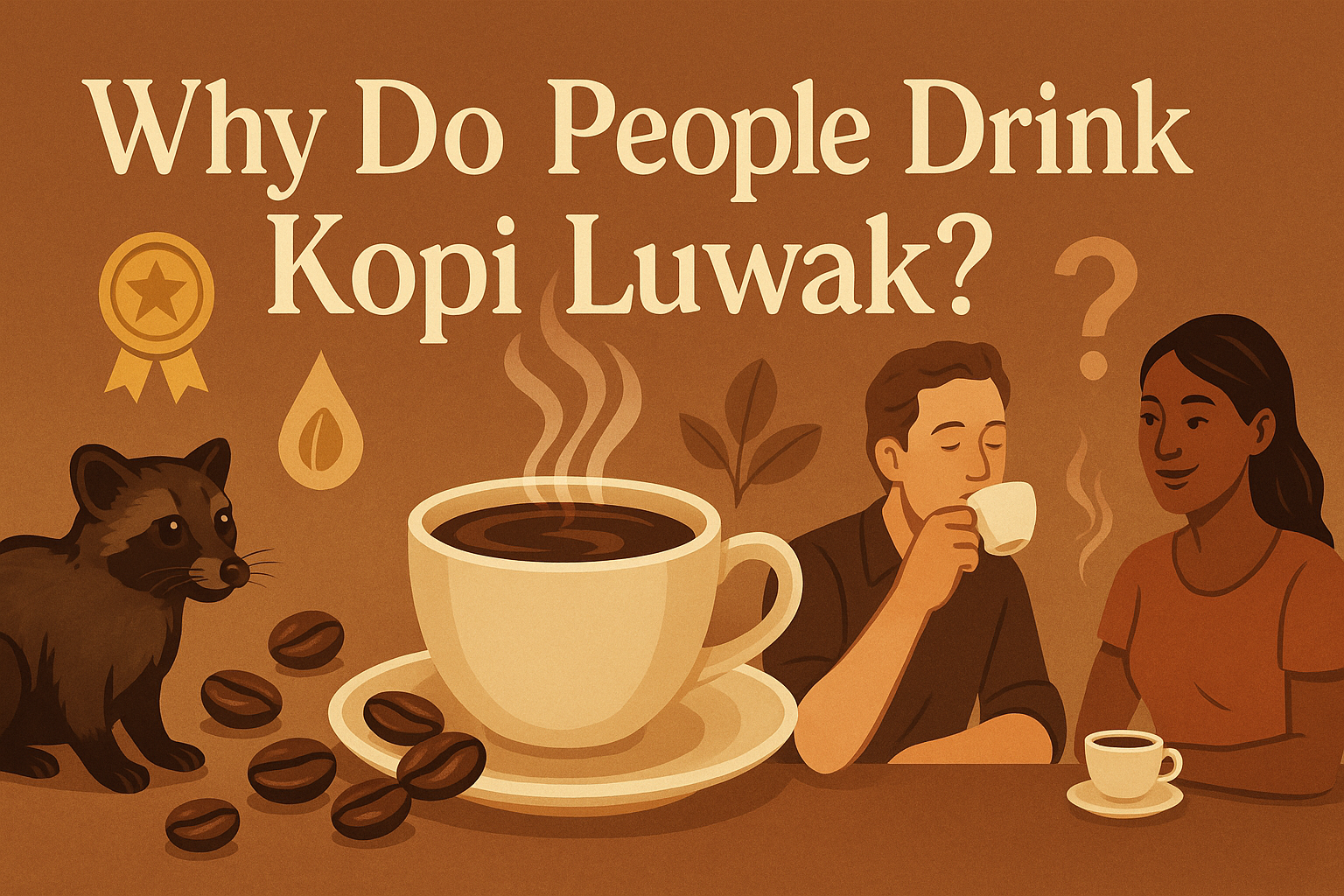
Reviewed October 7, 2026: the 2008 wine price-expectation abstract, the 2013 coffee-authentication abstract and the 2016 Bali welfare paper. None supplies a percentage breakdown of Kopi Luwak buying motives. The questions and tables are original editorial decision aids. The hero is an editorial illustration.
Write down your aim, the claims you need verified and your acceptable total cost. Then decide whether the actual product meets those conditions. Choosing it, comparing another coffee or declining the purchase are all possible outcomes; the price story should not decide for you.