
How to Store Coffee Beans: Canisters and Daily Habits
Updated · By Art de Vivre Coffee
As an Amazon Associate, Art de Vivre Coffee earns from qualifying purchases. The Amazon buttons below are affiliate links. Read our disclosure .
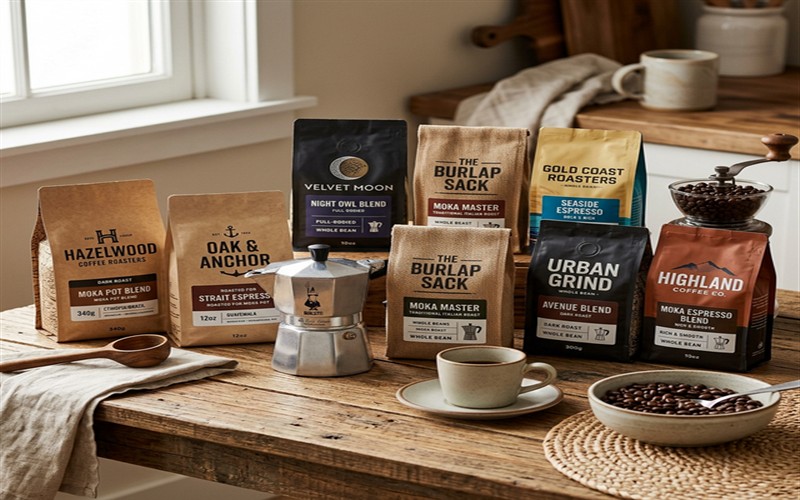
For moka coffee, choose storage around the format you buy: whole beans to grind later, or ready-ground coffee. Start with a container that closes properly and a cool, dark place away from the hob. A specialty lid can add convenience, but it cannot restore stale coffee.
Make the everyday routine simple
The National Coffee Association recommends limiting exposure to air, moisture, heat and light, buying manageable amounts and grinding beans close to brewing. Keep the container dry and close it after taking out your dose. If you already have suitable storage, you do not need to replace it for this guide.
- Label the coffee and note when you opened it. Keep different bags separate if you want to compare them.
- Choose a cupboard away from cooking heat. Put clear glass containers out of the light instead of displaying them beside a sunny window.
- Keep the package’s storage instructions. There is no universal freshness deadline for every roast and package.
Using Electric Atmos: check the lid before the coffee
Identify your lid before following a pumping routine. Fellow's Electric Atmos guide, 789-00126 B describes automatic vacuum monitoring and top-ups after engagement. That is different from a manual twist lid.
- Identify the contents. Use whole coffee beans. Fellow excludes grounds, other powdery foods and liquids from Electric Atmos; fine particles can obstruct the intake. A moka-ground bag still needs storage, but it needs a container that accepts grounds. If you also own a bean-to-cup machine, check its separate ground-coffee inlet instructions rather than assuming every bean hopper accepts powder.
- Identify the lid. The electric guide calls for charging before first use. After filling and fitting the lid, use its button to engage the vacuum; use it again to release the seal before removal.
- Read the status, not the age of the beans. A light reports what the lid is doing. It cannot tell you the roast date, whether the beans still taste good, or whether the container's capacity suits your routine.
| What you see | Meaning in this guide | Useful next check |
|---|---|---|
| Green, steady | Vacuum maintained | It does not measure freshness. |
| Green, flashing | Creating vacuum | Distinguish this from a maintained seal. |
| White, steady / flashing | Without vacuum / releasing it | Check which state you requested. |
| Red, steady / flashing | Battery empty / low | Check charging instructions, not bean quality. |
| Orange, steady / flashing | Connected: charged / charging | These are battery states. |
If the lid still does not operate as the guide describes, note the exact model, light pattern and charging state for Fellow support. Do not improvise disassembly or transfer a fix from a different Atmos lid. This is an instruction-reading checklist, not a repair diagnosis or a guarantee of a good seal.
Before refilling: match the contents, size and cleaning job
A canister change should solve a specific handling problem. For example, imagine you move from a 250 g whole-bean bag to 250 g of moka-ground coffee. The printed coffee weight has stayed the same, but the whole-bean-only Electric Atmos restriction now matters more than its claimed capacity. Do not buy the larger electric body to solve a contents-compatibility problem.
- You buy grounds: choose storage explicitly suitable for grounds and follow its cleaning directions. Grinding everything in advance to fit your routine is a different choice from buying a grinder for whole beans; a vacuum lid does not erase that difference.
- You need to wash Electric Atmos: Fellow's electric-specific care page calls for a damp cloth on the lid and hand-washing the body. It explicitly excludes both lid and canister from the dishwasher. Do not treat the electric lid like a washable empty jar; let the cleaned body dry completely before adding dry coffee.
- You are comparing sizes: keep the remaining bag amount and your own measured use in view. A listed bean capacity is not a dose, a shelf-life promise, or proof that a larger pack will be used at its best.
The eight existing listings below remain shopping options, not a tested freshness league table. The manufacturer's light and care instructions help you operate an exact lid; they do not establish a universal number of extra fresh days or justify replacing storage that already suits your coffee.
Eight canister listings, four closure styles
Match the mechanism to your coffee
Plunger: Airscape’s inner lid moves down as you use the contents. Follow its closing procedure; it is different from a powered vacuum pump. Valve: the Coffee Gator design vents gas through a valve while the container is closed. Powered vacuum: Electric Atmos needs charging and uses its button-operated lid to remove air. Follow the electric model’s instructions rather than the manual twist-lid procedure.
If you buy ready-ground moka coffee , the whole-bean-only restriction rules out the Atmos option here. Do not pour fine grounds into a vacuum intake just because another product in the same comparison accepts them.
Pick a size you will use
Compare the bag you buy with the canister’s stated volume and usable fill space. Liters describe container volume; ounces on coffee packs describe weight. Bean size, roast and the space taken by the lid affect how much fits, so avoid assuming every 0.7 L container holds the same bag.
As a planning example, if your correctly filled pot uses 18 g per brew and you brew once a day, a 250 g bag lasts about 14 brews. That is a purchasing calculation, not a recommended dose or freshness guarantee. Measure your own routine before choosing a bulk container.
Cleaning and longer storage
Follow each lid’s cleaning instructions. Coffee Gator’s instructions keep moisture away from its valve; Fellow says to wipe the electric lid and hand-wash the body. Let washed parts dry completely before refilling. Do not assume any of these lids can go in a dishwasher.
For freezing or refrigeration, consult the coffee supplier and container instructions first. The National Coffee Association highlights moisture and condensation as considerations. These eight listings are compared for everyday storage here; this article does not establish freezer suitability or promise months of unchanged flavor.
Questions before you buy
Do I need to buy a dedicated coffee canister?
No. A suitable airtight container kept in a cool, dark location can work. Choose a dedicated canister if its size, closure or handling makes your routine easier.
Can I put moka-ground coffee in Fellow Atmos?
Fellow recommends whole coffee beans only. Fine particles from ground coffee may clog the intake valve and prevent the vacuum from sealing properly.
Are Airscape, Coffee Gator and Fellow Atmos the same kind of container?
No. Airscape uses a movable inner plunger to displace air; Coffee Gator uses a sealed closure with a CO2-release valve; the selected electric Fellow Atmos uses a powered vacuum lid.
Does a canister guarantee a fixed number of fresh days?
No. Coffee, roast, packaging, handling and storage conditions vary. A date dial is a reminder, not a freshness sensor or a promise of shelf life.
Does Electric Atmos need the manual twist-lid routine?
No. The cited Electric Atmos guide uses its button to engage or release the vacuum, and the electric lid monitors and tops up the vacuum when needed. Check the instructions for the lid you own; a green light indicates its vacuum state, not coffee freshness.
Sources and selection method
The original eight-listing comparison was checked on September 28, 2026. On October 17, 2026, we re-read the National Coffee Association storage page, Fellow Electric Atmos guide 789-00126 B, and the linked Fellow whole-bean and electric-cleaning support pages for the new operating and refill checklist. We did not retest all eight retail variants. This is research, not a hands-on freshness ranking; prices and availability remain retailer information.
- National Coffee Association: storage conditions and moisture considerations
- Planetary Design: Airscape Kilo and inner plunger
- Coffee Gator instructions: valve care and date dial
- Fellow Electric Atmos: operating guide
- Fellow: whole-bean restriction
- Fellow: electric lid and canister cleaning
See how we review products and our editorial policy .