How to Say Coffee in Vietnamese: Cà Phê, Pronunciation and Ordering
Read the spelling, listen to pronunciation resources and prepare a short coffee order with the café’s own menu.

How do you say coffee in Vietnamese?
Coffee in Vietnamese is cà phê. Keep the Vietnamese spelling when saving a menu or showing an order on your phone. The plain-text form “ca phe” can be useful for searching, but the marked form gives you more information for pronunciation.
Your first café checklist
- Find the exact drink name on the café’s own menu.
- Choose the serving temperature and check the ingredients.
- Listen to a recording before practicing the name aloud.
- Show the written order if you need to clarify it.
This guide brings together a university pronunciation resource, a Vietnamese teacher’s ordering lesson and an official coffee recipe. Use the source links for further listening and study; the practice sheets below are our own suggested preparation tools.
Read the spelling before practicing the sound
Treat cà phê as two syllables. The grave mark in cà identifies huyền, taught as a falling tone. In phê, ê is the vowel and there is no tone mark: the tone is ngang. The circumflex in ê is not itself a tone mark.
| Syllable | Tone mark | Tone name |
|---|---|---|
| cà | Grave: à | huyền |
| phê | None; ê is the vowel | ngang |
| đá | Acute: á | sắc |
| đen | None | ngang |
d and đ are separate letters. Preserve the stroke in đá and đen when you copy them. Consult Tung Hoang’s alphabet lesson and tone lesson, published by Michigan State University Libraries.
For this article, use the full marked spelling as your reference line. Add a personal reminder underneath only after listening; keep the reference visible so the reminder does not replace the word you are trying to learn.
Coffee names to recognize on a menu
- Cà phê đen: black coffee.
- Cà phê trứng: egg coffee.
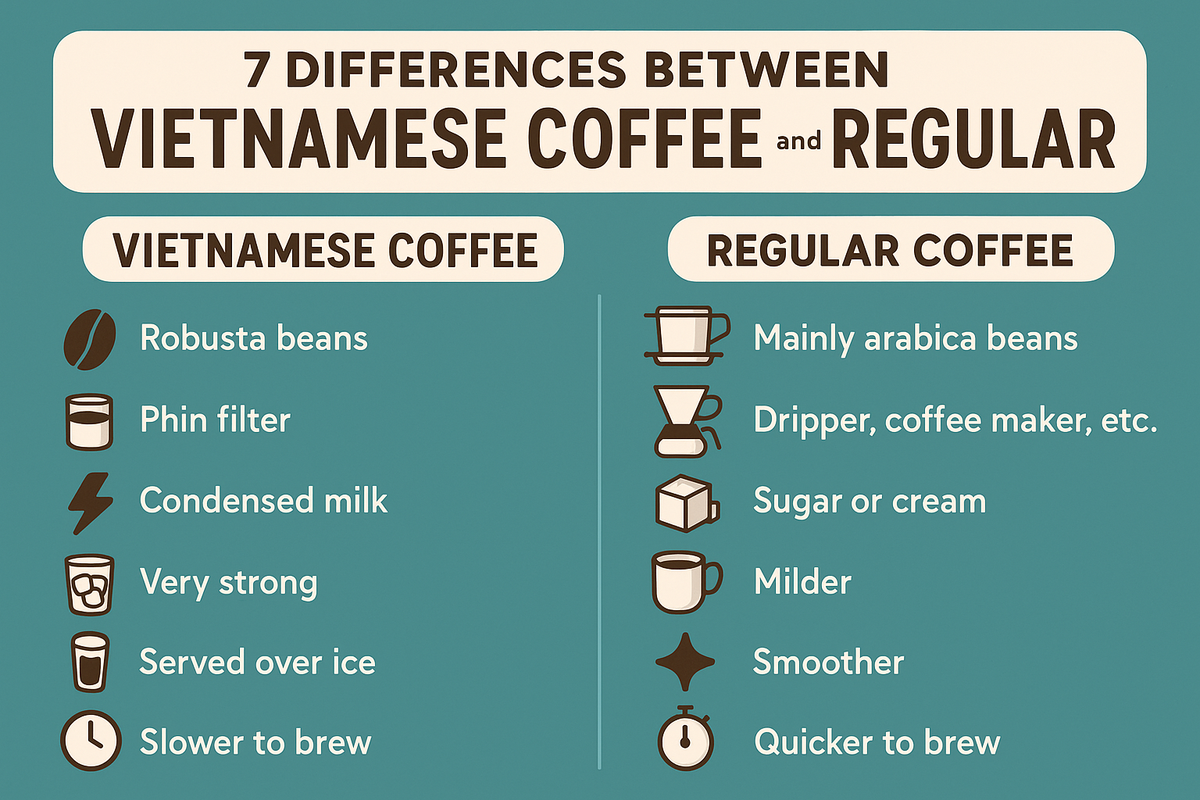
- Cà phê sữa đá: iced milk coffee. The Vietnam Tourism recipe uses sweetened condensed milk and ice.
References: Tieng Viet Oi’s drink vocabulary and Vietnam Tourism’s recipe collection (coffee recipe, PDF page 6).
Use these names to locate a menu item, then read that item’s description. If a particular ingredient matters to you, make it a separate question for the café. A short drink name is not enough information to settle an ingredient restriction, serving size or requested substitution.
Preparing a drink at home is a different task from placing an order. Our phin brewing guide explains brewer-specific steps. Our bạc xỉu guide helps you plan a milk-forward home version and record the amounts you use.
A short ordering pattern to practice
Tieng Viet Oi teaches an ordering pattern built from Cho, your pronoun, a quantity and the requested item. The following coffee order is an editorial adaptation of that pattern:
Cho tôi một cà phê sữa đá.
I’d like one iced milk coffee.
The lesson also gives Bao nhiêu tiền? for asking how much something costs. Its pronoun guidance depends on the people in the conversation; ask a teacher or your host which form suits your situation.
Prepare the drink name and quantity first. Keep any request about ingredients or substitutions on a separate line and confirm that the café can provide it before placing the order. If you are unsure of a translated request, use the menu, an ingredient list or another shared language to clarify it.
For a practice order, write four fields on your phone: menu name, quantity, serving preference and question to confirm. Fill them from the actual menu. Then check the order the café repeats back to you against those four fields. This gives you a useful way to spot a mismatch without trying to memorize a long dialogue.
Listen, repeat and compare
The Forvo page for cà phê offers several contributor recordings. Use it as an additional listening resource. A contributor recording alone does not establish one pronunciation for every region.
- Choose one reference. Save the lesson or recording link so you can return to the same example.
- Listen with the written word visible. Follow the two syllables on your reference line before attempting a longer order.
- Record your own attempt. Compare it with that same example and write down one question to ask a teacher.
- Add the complete menu item. Practice the drink name you intend to order, then add your quantity.
Use a teacher’s feedback to choose what to work on next. Avoid judging your pronunciation by whether a single order happened to succeed: the server may also have used your pointing gesture, the visible menu or other context.
Check the café’s arrangements
Prepare for the café you plan to visit. Look for its current menu, opening information and payment options. Save the details you need rather than relying on a general statement about what every Vietnamese café does.
Before ordering, check whether you should order at a counter, take a seat or wait for assistance. If the process is unclear, ask. Keep the current listed price in your notes and confirm any choice that could change the amount due. This guide does not provide a fixed national price or exchange-rate estimate.
Give yourself a simple fallback: show the marked drink name and quantity on your phone. The immediate aim is a clear order that matches what you want. You can return to a longer conversation or a pronunciation question when there is time for it.
Build your own five-minute practice card
Use this suggested exercise before a café visit. It is a preparation worksheet, not a language proficiency test.
- Reference: copy cà phê with its marks, followed by the exact item from the café’s menu.
- Listening: record the source link, the example you selected and any accent information that source actually provides.
- Order: fill in quantity and the question you still need to confirm.
- Feedback: note one correction from a teacher or the clarification you needed at the café.
- Next attempt: change that one part and practice the order again.
If your phone display changes or drops the marks, keep a screenshot of the menu alongside your typed card. Recheck the text after copying it into another app. During practice, you should be able to see the reference, your planned order and your unanswered question without scrolling through unrelated notes.
After the visit, record the drink you actually ordered and any confirmed ingredient details. Keep those notes specific to that café and visit. They will be more useful for a return visit than a broad claim about the whole country.
Keep the word, the sound and the order together
Start with cà phê, use a listening resource to practice it, then work with the café’s exact menu item. A clear written order and a short list of questions give you a practical fallback while you learn.
Updated October 7, 2026. Language references: Tung Hoang, Basic Vietnamese, Michigan State University Libraries (2023); Tieng Viet Oi’s ordering lesson; Forvo contributor recordings; and Vietnam Tourism’s coffee recipe. Source links appear beside the relevant material. The phone card and practice workflow are editorial suggestions.