How to Make Vietnamese Egg Coffee: Ingredients and Egg Handling
Plan the coffee base, use egg ingredients appropriate for an uncooked topping, and adjust a small starter batch without assuming hot coffee cooks the egg.
By Art de Vivre Coffee · Published January 16, 2025 · Article and sources updated October 7, 2026
Check the egg ingredient before starting
This is an untested home preparation suggestion, not a Giang Cafe recipe, a claim of training in Hanoi or a verified cafe-equivalence result. Whipping an egg or floating it on hot coffee is not a measured cooking step.
What the drink combines
Vietnam Tourism describes ca phe trung as a Hanoi specialty with an egg-yolk, sugar and condensed-milk foam over coffee. That description identifies the style; it does not verify our ingredient quantities, handling procedure or a cafe's proprietary method.
A small starter batch to adjust
The amounts below are editorial starting suggestions for one small drink, not tested yield, foam or nutrition results. Check package instructions and your cup size.
| Ingredient | Starting amount and check |
|---|---|
| Prepared coffee | About 90 mL; brew according to the exact equipment instructions |
| Pasteurized egg yolk | One yolk or the product's stated equivalent; verify treatment and use directions |
| Sweetened condensed milk | About 1 tablespoon; record the actual product and amount |
| Optional sugar | Start without extra sugar, or add up to 1 teaspoon to suit the next batch |
Use clean bowls and a whisk or mixer suitable for these ingredients. A milk frother is not automatically approved for eggs or thick mixtures. Keep room in a heat-resistant cup for the topping.
The phin guide and moka instructions guide cover separate brewing options. Do not apply a fixed spoon dose or espresso-fine grind to every filter or pot.
Prepare the coffee and topping separately
- Check and set out the equipment. Verify the egg product is suitable for this uncooked use. Wash hands, tools and surfaces before and after egg handling. Keep eggs refrigerated; FDA specifies 40 F (4 C) or below for egg storage.
- Brew the coffee. Follow your brewer's fill, grind and heat directions. Measure the amount served. Avoid arbitrary timing or hotplate instructions for an unidentified cup or brewer.
- Mix the topping. Follow the egg product's handling directions. Combine the chosen pasteurized yolk amount and condensed milk in a clean bowl. Whisk or use a permitted mixer setting until the mixture develops the texture you want. Whipping time and volume depend on the product and tool; no fixed eight-minute or triple-volume result is guaranteed.
- Assemble. Spoon a small amount of topping over the prepared coffee, leaving room to stir. If the topping disperses, that changes the presentation, not its treatment or safety status.
- Serve and clean up. Follow the ingredient's time and storage instructions. FDA advises that egg dishes should not remain unrefrigerated beyond two hours, or one hour above 90 F (32 C). These are maximum handling limits, not a reason to hold this drink at room temperature.
If the appropriate egg product is unavailable, choose an egg-free coffee. For a cooked egg preparation, use a suitable established recipe and verify its cooking endpoint; FDA's general egg-dish guidance specifies 160 F (71 C) with a thermometer. This whipped starter does not provide a validated cooked-custard method.
Adjust texture and sweetness without changing the handling plan
- Topping stays thin: check the product's composition and the mixer's permitted use. Do not replace a treated ingredient with untreated yolk to chase a foam result.
- Too sweet: record less condensed milk or added sugar for the next batch. This also changes the recipe and possibly texture; no guaranteed like-for-like result is established.
- Coffee seems weak: adjust a future brew within the equipment's instructions, rather than overfill the filter or apply an unsupported grind setting.
- Uncertain treatment or storage: do not use the uncertain egg topping; choose an egg-free drink.
Treat substitutions as different recipes
A plant drink or coconut cream has its own ingredient and nutrition panel. An egg-free version with dairy milk is not vegan. Aquafaba and other substitutes can need different recipes and handling; no equivalent foam or taste has been tested here.
For an iced version, use a suitable separate cooling and food-handling plan. This guide does not validate a warm topping's storage life or safety after cooling. Check egg and milk allergens with the person being served.
Use the ingredient and nutrition worksheet for the actual additions and the caffeine serving guide for the limits of generic caffeine figures.
Sources and scope
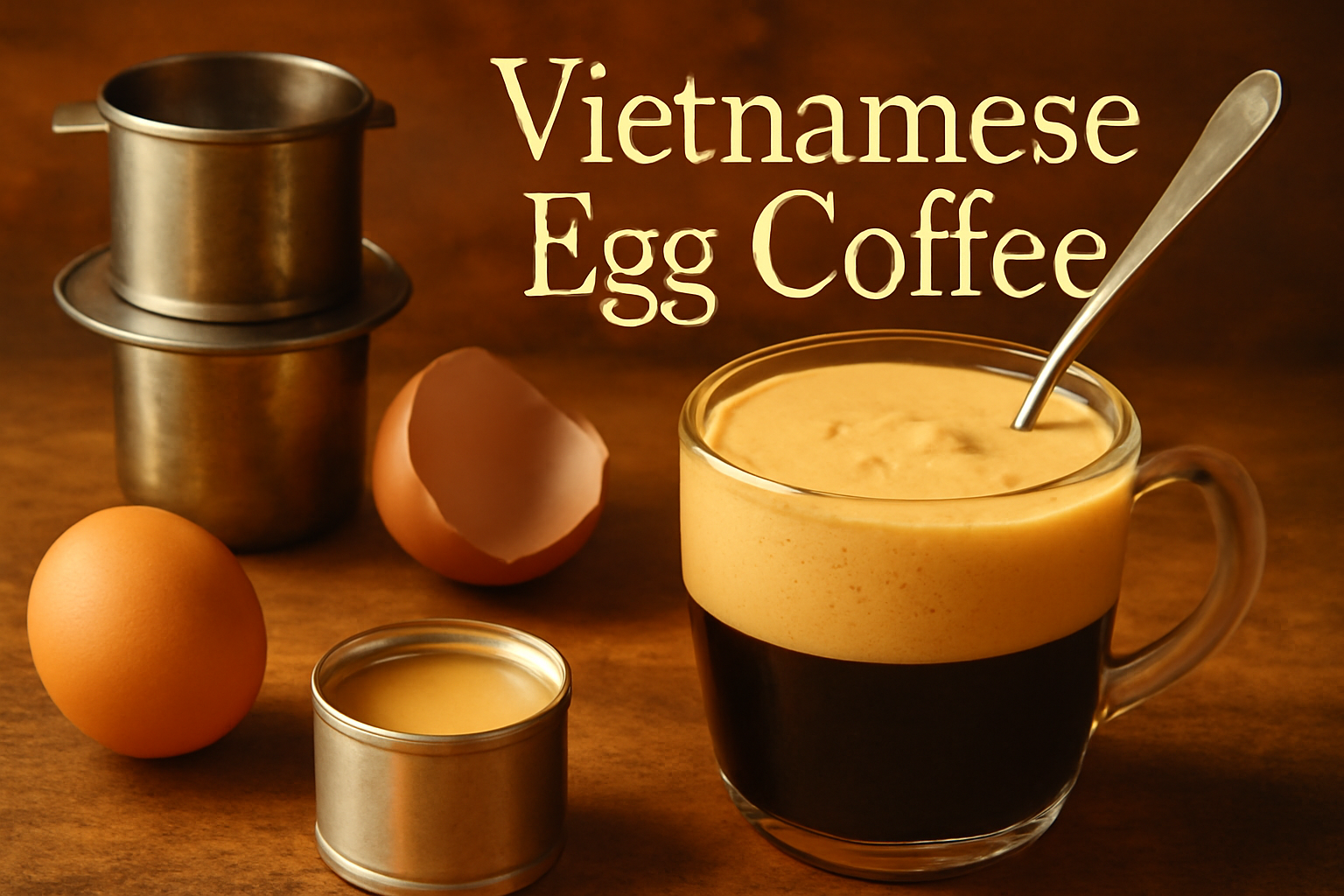
Reviewed October 7, 2026: FDA egg handling guidance; Vietnam Tourism's description of egg coffee. These sources support the handling principles and drink description, not a test of this starter recipe. The illustration shows the drink style and does not document our own preparation.