
As an Amazon Associate I earn from qualifying purchases. Product buttons on this page are affiliate links. Our disclosure. Verify the selected model, current seller and price before ordering.
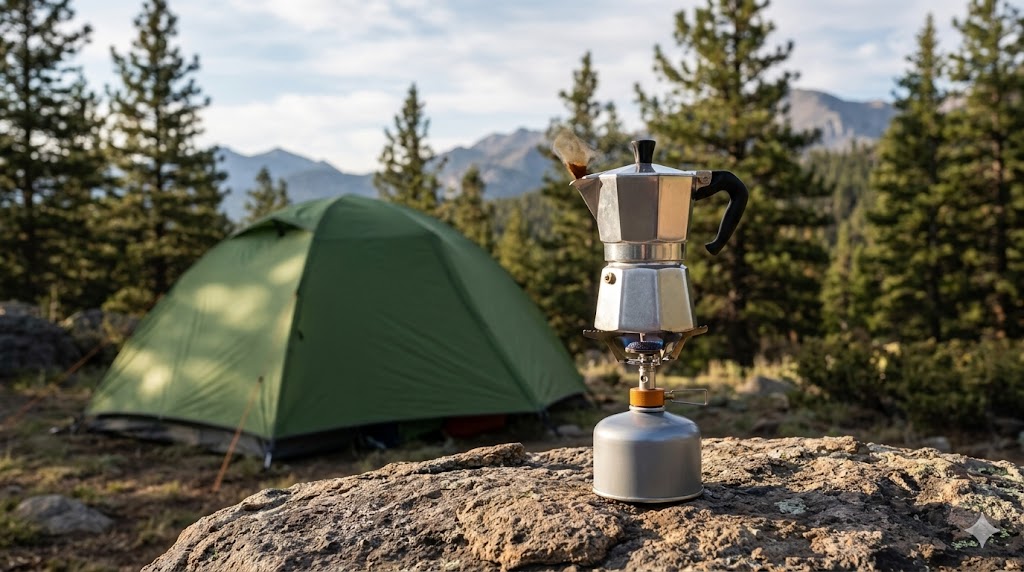
Start with servings and stove support
A 3-cup or 6-cup label describes small moka servings, not ordinary mugs. Choose the amount of concentrated coffee you normally prepare. A smaller pot may suit one person, while a larger pot can make sense for a group; neither label guarantees an exact finished volume in every brew.
Before buying, check that your stove’s supports can hold the pot’s base securely and that its instructions permit that type of cookware. The product pages below identify compatible heat sources, but they cannot verify your specific camp stove. We have not field-tested or weighed these pots, so this guide does not rank backpacking performance, brew speed or durability.
| Exact linked option | Body | Manufacturer-listed heat sources |
|---|---|---|
| Primula Classic, silver 6-cup | Aluminum | Gas/propane, electric and ceramic |
| GROSCHE MILANO, white 3-cup | Aluminum | Gas/propane and electric; not induction |
| IMUSA B120-22062M, silver 6-cup | Stainless steel | Gas, electric, glass-top and induction |
Three identifiable purchase options
Primula Classic, silver 6-cup
The official Primula page lists electric, ceramic, gas and propane stovetops. This 6-cup label refers to small demitasse servings, not six full mugs. Confirm the exact size and aluminum body at checkout; a different variant may have different dimensions or heat-source instructions.
View Primula Classic, silver 6-cup on Amazon →GROSCHE MILANO, white 3-cup
The official MILANO 3-cup page lists gas, electric and propane use and explicitly excludes induction. The white finish is the selected Amazon variant. Confirm the exact size and aluminum body at checkout; a different variant may have different dimensions or heat-source instructions.
View GROSCHE MILANO, white 3-cup on Amazon →IMUSA B120-22062M, silver 6-cup
IMUSA lists gas, electric, glass-top and induction compatibility for this exact model. On induction, the cooktop must still detect its base size. Confirm the exact size and stainless steel body at checkout; a different variant may have different dimensions or heat-source instructions.
View IMUSA B120-22062M, silver 6-cup on Amazon →Check the outdoor setup before heating
- Use the stove where its manufacturer permits. Never treat a tent, vehicle or closed shelter as a suitable cooking area. MSR’s published stove warnings call for outdoor use and prohibit enclosed-space use.
- Check the pot support. A narrow moka base must sit stably on the support. If the stove maker has a minimum cookware diameter or requires a special support, follow that requirement.
- Keep the flame beneath the base. Follow the pot and stove instructions; Bialetti’s moka guidance says gas flames should not extend up the sides of the pot.
- Fill and brew as directed. Use water and ground coffee in the correct chambers, keep the safety valve unobstructed and do not tamp the coffee. Do not leave the pot unattended.
These checks matter more than an unsourced claim that a pot “works on all camp stoves.” See the MSR stove safety instructions and Bialetti’s moka use guidance.
Pack only after the pot cools and dries
Let the pot and stove cool before handling or packing. Empty the grounds, clean each component according to the exact model’s instructions, and dry it before reassembly or storage. Primula recommends warm-water rinsing; GROSCHE says its MILANO is hand-wash only; IMUSA also specifies hand washing.
For whole beans on a trip, a grinder adds weight and setup time. A properly labeled pre-ground moka coffee can simplify packing; read our ground-coffee format guide. Check gasket condition before travel using the replacement-part guide.
Sources and selection method
Product identities were checked against the linked Amazon US listings on September 28, 2026. Material, heat-source and care statements are based on the manufacturers’ pages below. We have not conducted a camping field test, measured brew speed or verified today’s price or inventory.
Measure the complete kit and plan waste handling
Record the exact brewer, cup, protective packing, cleaning supplies and approved accessories together. Compare actual packed dimensions and total carried weight; shipping weight or a pot-only figure does not establish the complete load. Keep the supplied instructions and exact compatible part identifiers. Confirm manufacturer permission before campfire use; a grate alone does not establish suitability.
Use the stove-specific windscreen instructions. Cascade Designs guidance identifies WindPro 2 as its exception and prohibits windscreens with stoves lacking a remote fuel source because the enclosed canister can overheat. This is not permission for a different stove arrangement.
Leave No Trace waste guidance calls for packing out food waste and washing away from water sources; strain wash water and pack out the residue. Follow the land manager’s additional rules. Both sources were checked October 7, 2026. Follow the exact brewer care instructions rather than transferring detergent permission from another model.
Common questions
Can I use a camping stove inside a tent?
No. Follow the stove manufacturer’s outdoor-use rules. MSR warns against using its camp stoves inside tents, vehicles or other enclosed spaces.
Does a 6-cup moka pot make six full mugs?
No. Moka-pot cup labels describe small coffee servings. Compare the exact pot’s stated capacity with the amount you intend to serve.
Will every small moka pot sit safely on my camp stove?
No. Check the stove’s pot supports and cookware-size limits, the pot base, and both sets of instructions before heating.